| 1. Client ownership |
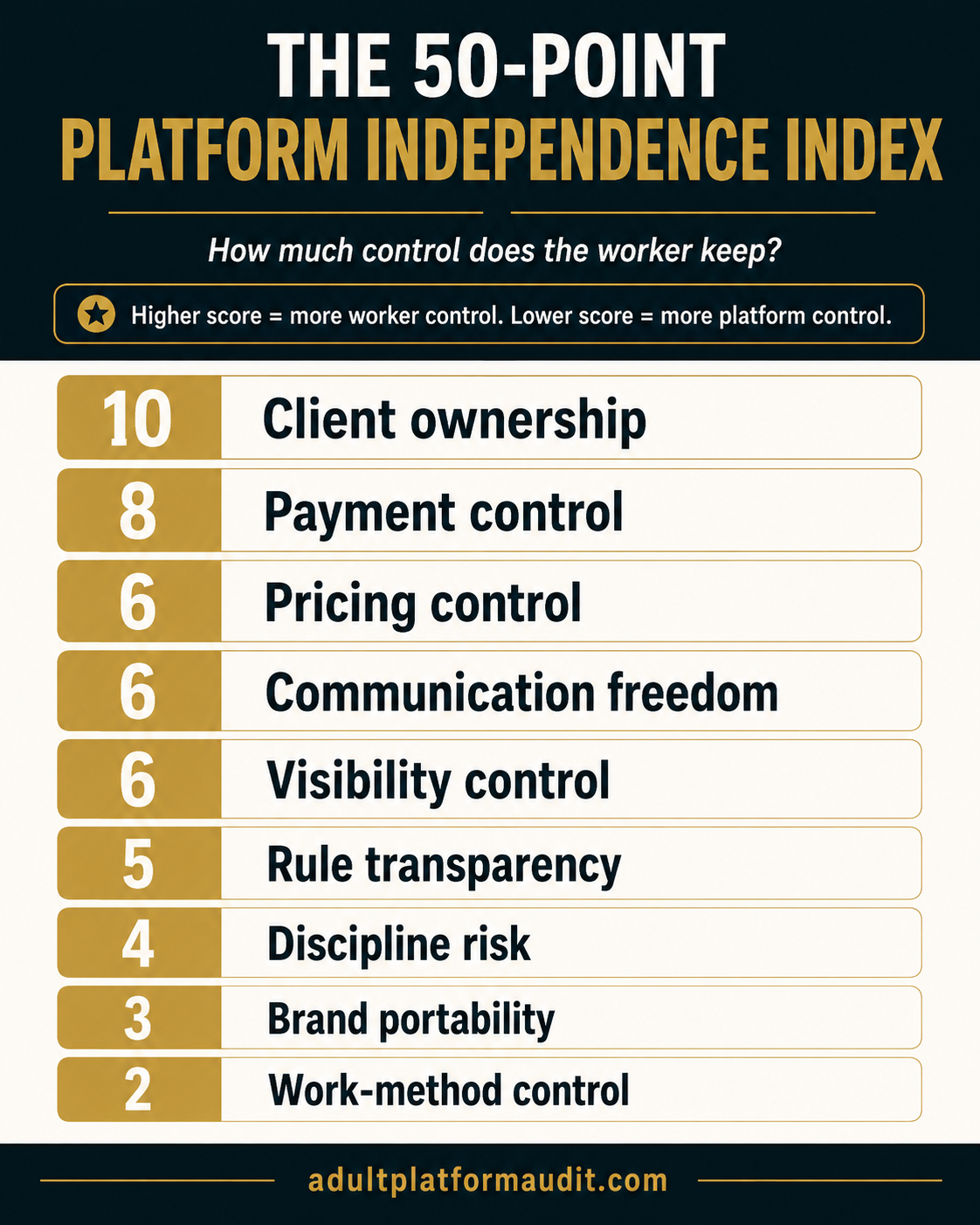
10 |
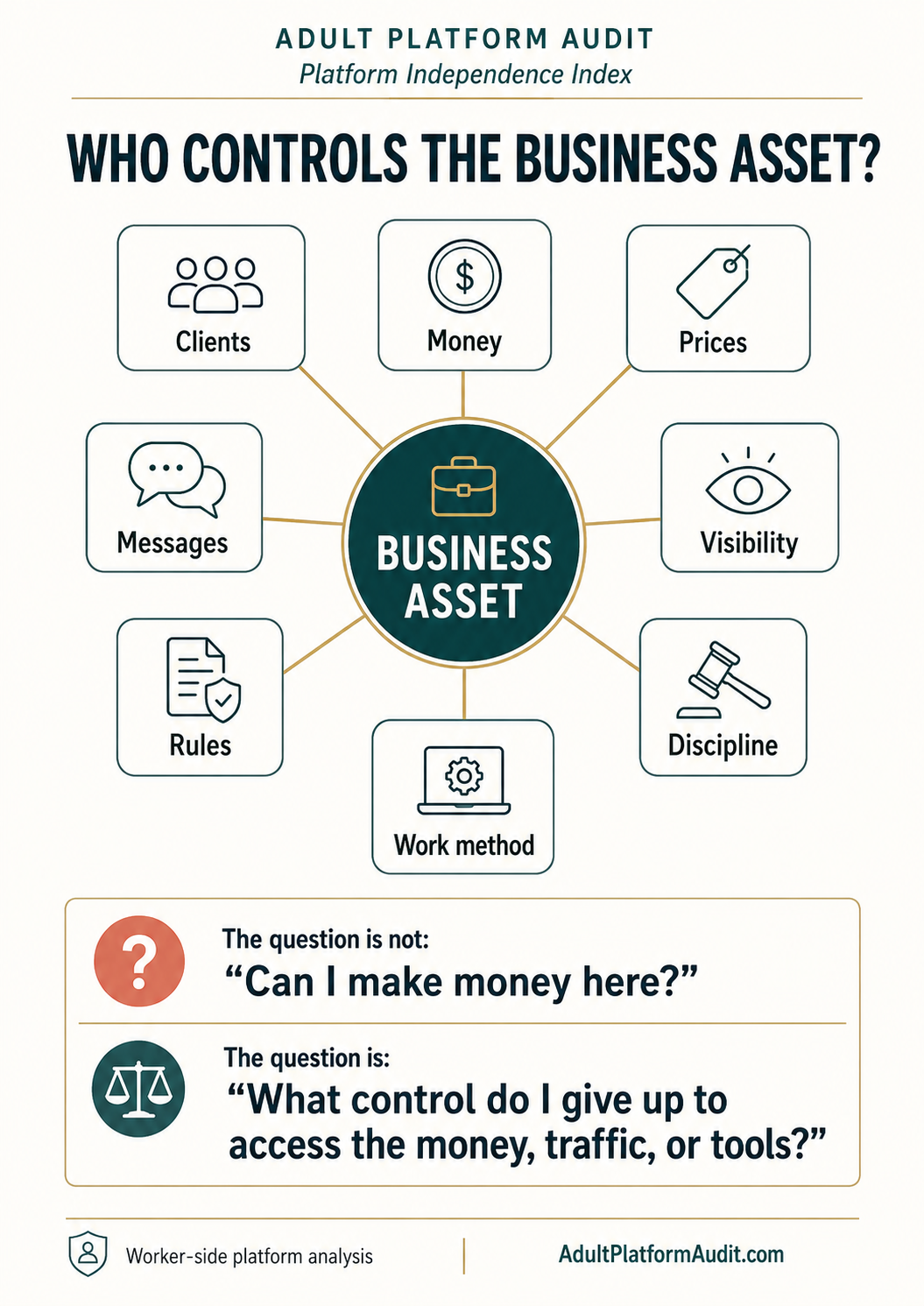
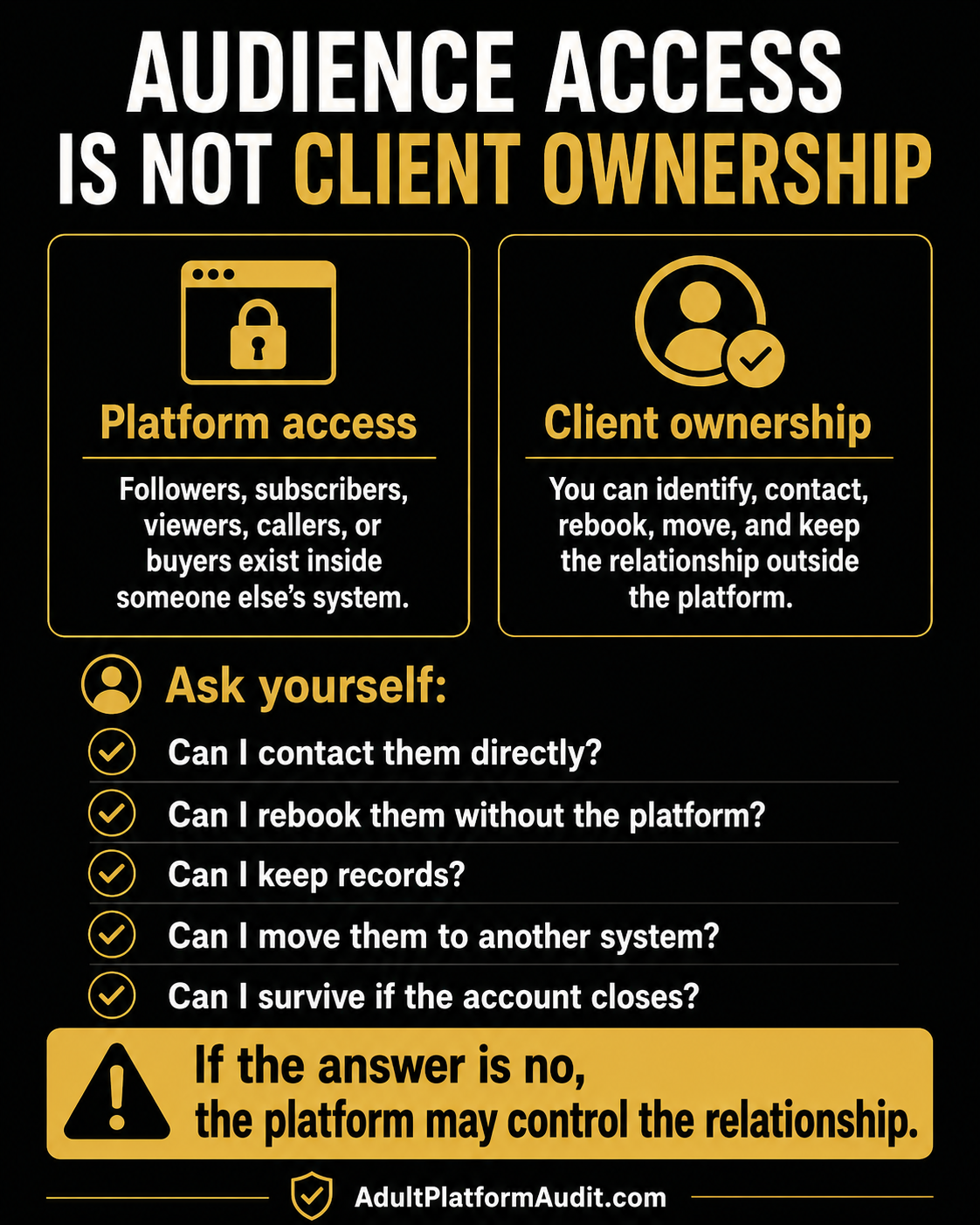
Who controls client relationships, viewer relationships, screening, repeat access, direct contact, referrals, reviews, and long-term customer value. |
The platform owns or captures the client relationship and can block, reroute, limit, hide, or cut off access. |
The worker can build, screen, retain, contact, and move client relationships independently. |
| 2. Payment control |
8 |
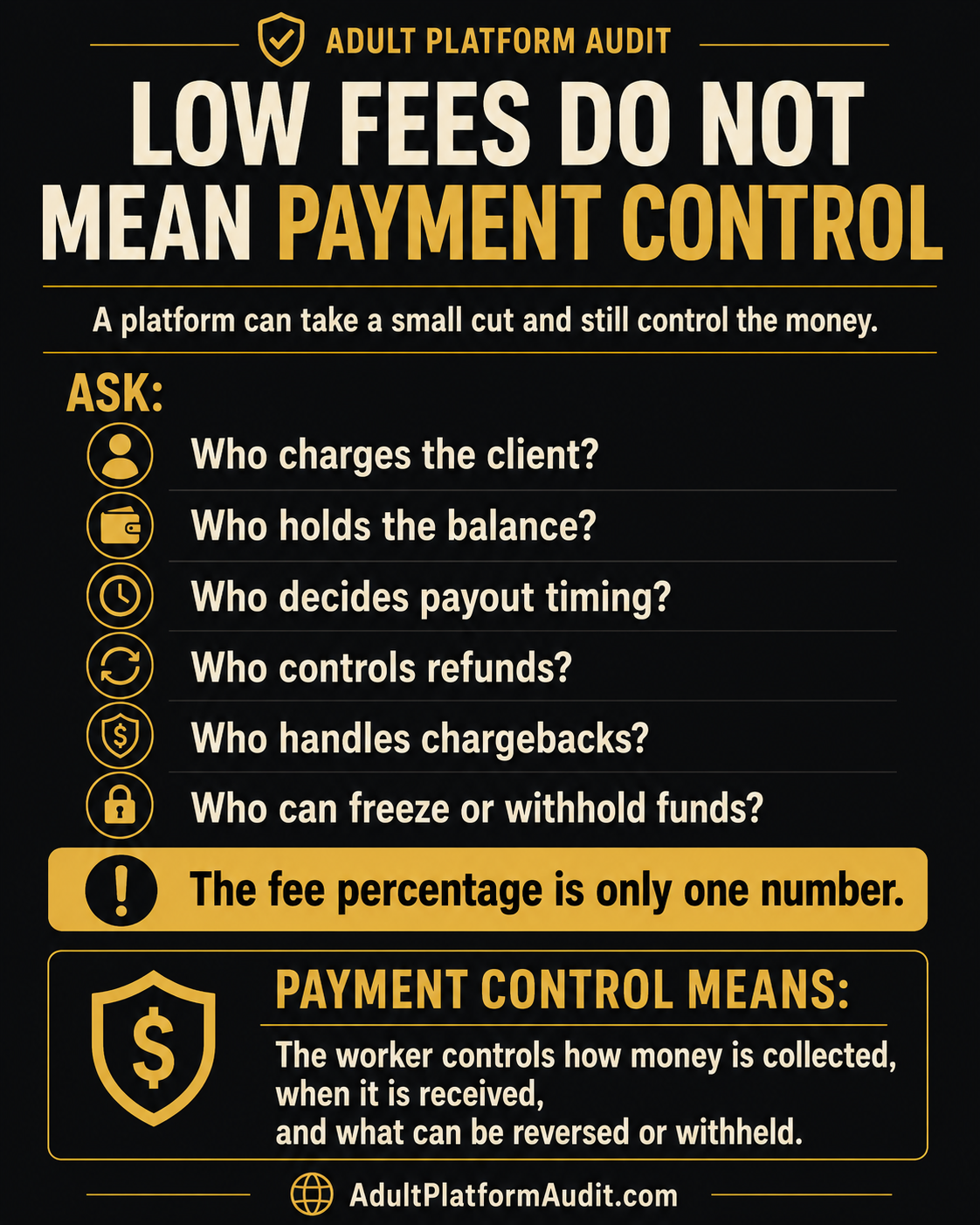
Who controls payment processing, payout timing, fees, refunds, chargebacks, holds, balances, deductions, monetization access, and financial risk. |
The platform controls the money flow and can delay, reverse, withhold, reduce, reprice, or demonetize funds. |
The worker controls payment terms, payment method, payout timing, and financial exposure. |
| 3. Pricing control |
6 |
Whether the worker sets rates, discounts, minimums, packages, paid access terms, tips, subscriptions, custom prices, and promotional participation. |
The platform sets or heavily steers pricing, discounts, contests, bundles, free access, or promotional structure. |
The worker sets prices directly and can refuse discounts, contests, bundles, and promotional pressure. |
| 4. Communication freedom |
6 |
Whether the worker can communicate directly with clients or viewers, share lawful contact methods, use links, preserve records, and move conversations off-platform. |
The platform restricts contact, off-platform references, links, direct communication, screening, or relationship migration. |
The worker can communicate freely and choose the safest lawful channel for the situation. |
| 5. Visibility control |
6 |
Who controls placement, search ranking, traffic, discovery, recommendations, category placement, suppression, promotion, and audience routing. |
The platform controls exposure and can bury, boost, rotate, suppress, demonetize, redirect, or disappear the worker. |
The worker has independent traffic sources and is not dependent on platform placement or search visibility. |
| 6. Rule transparency |
5 |
Whether rules are clear, stable, visible, specific, consistently applied, and realistically understandable before enforcement. |
The platform uses broad, changing, vague, hidden, contradictory, or inconsistently applied rules. |
Rules are clear, narrow, stable, visible, and tied to specific safety, legal, or operational needs. |
| 7. Discipline risk |
4 |
Whether enforcement is transparent, appealable, proportionate, predictable, and limited in its harm to income, access, search visibility, content, or audience reach. |
The worker can be suspended, demoted, hidden, fined, demonetized, removed, or terminated with little process. |
Enforcement is documented, proportionate, contestable, and does not create sudden business destruction. |
| 8. Brand portability |
3 |
Whether the worker can carry name recognition, content, links, reviews, audience, reputation, data, search value, and identity outside the platform. |
The platform captures reputation, audience, data, content value, or search value and makes the business hard to move. |
The worker owns the brand, audience, public identity, content value, and off-platform funnel. |
| 9. Work-method control |
2 |
Whether the worker controls how the service is structured and delivered, including schedule, session format, pacing, communication style, tools, creative presentation, working conditions, and method of service. |
The platform dictates format, timing, required features, scripts, interaction style, display rules, or performance conditions in ways that narrow worker discretion. |
The worker controls schedule, format, pacing, presentation, service structure, and method of delivery without unnecessary platform interference. |